READ: On Immunity by Eula Biss

Viruses are scary. And confusing. Eula Biss’s exploration of viruses, immunizations, and vaccinations in “On Immunity” takes the debates and breaks them down in a readable, informative way. She presents different sides of the vaccine arguments, and she brings up lots of questions and ideas for readers to think about. Biss connects stories about the birth of her first child with the short, super-interesting history of immunizations while making connections between stories that we are all familiar with like Achilles, Dracula, and Carson’s “Silent Spring.”

She explores ideas like herd immunity – basically, that means you don’t have to immunize your children, because other people immunize their children. Hence, your child is protected but does not have to take “risky” vaccinations.

We tend to value our own bodies, our own homes over the collective good. We often think of ourselves as islands, and not as an entwined hive. Biss writes, “The health of the homestead next to ours does not affect us, this thinking suggests, so long as ours is well tended.”

Biss reveals some origins of our fear of vaccinations.  Overall, we have a collective fear of government and regulation in our lives. I love this paragraph:

Our cynicism may be justified, but it is also sad. That so many of us find it entirely plausible that a vast network of researchers and health officials and doctors worldwide would willfully harm children for money is evidence of what capitalism is really taking from us. Capitalism has already impoverished the working people who generate the wealth for others. And capitalism has already impoverished us culturally, robbing unmarketable art of its value. But when we begin to see the pressures of capitalism as innate laws of human motivation, when we begin to believe that everyone is owned, then we are truly impoverished.

Our uneasiness with vaccinations is a huge shift from the beginning of the century when people lined up to be in vaccine studies because they watched the horrors of smallpox and polio. They requested to be a part of trials, they wanted protection.

As I read this book, I also listened to the Radiolab podcast Patient Zero. They talk about the origins of HIV and the true story of Typhoid Mary and the latest Ebola outbreak – super riveting.

I finished this book and listened the above podcast as the Ebola “crisis” in the United States winded down. Fear causes crazy, irrational, and often selfish, behavior. Instead of concentrating on the enormous crisis in Africa, the news focused on the few cases that we had in the United States. Of course Ebola is terrifying – but the podcast describes how the virus has not mutated into an easily transmittable virus yet. If it can be contained now, that may help with the mutations that could cause it to spread easier.
LIFE: Ruby, Story #1

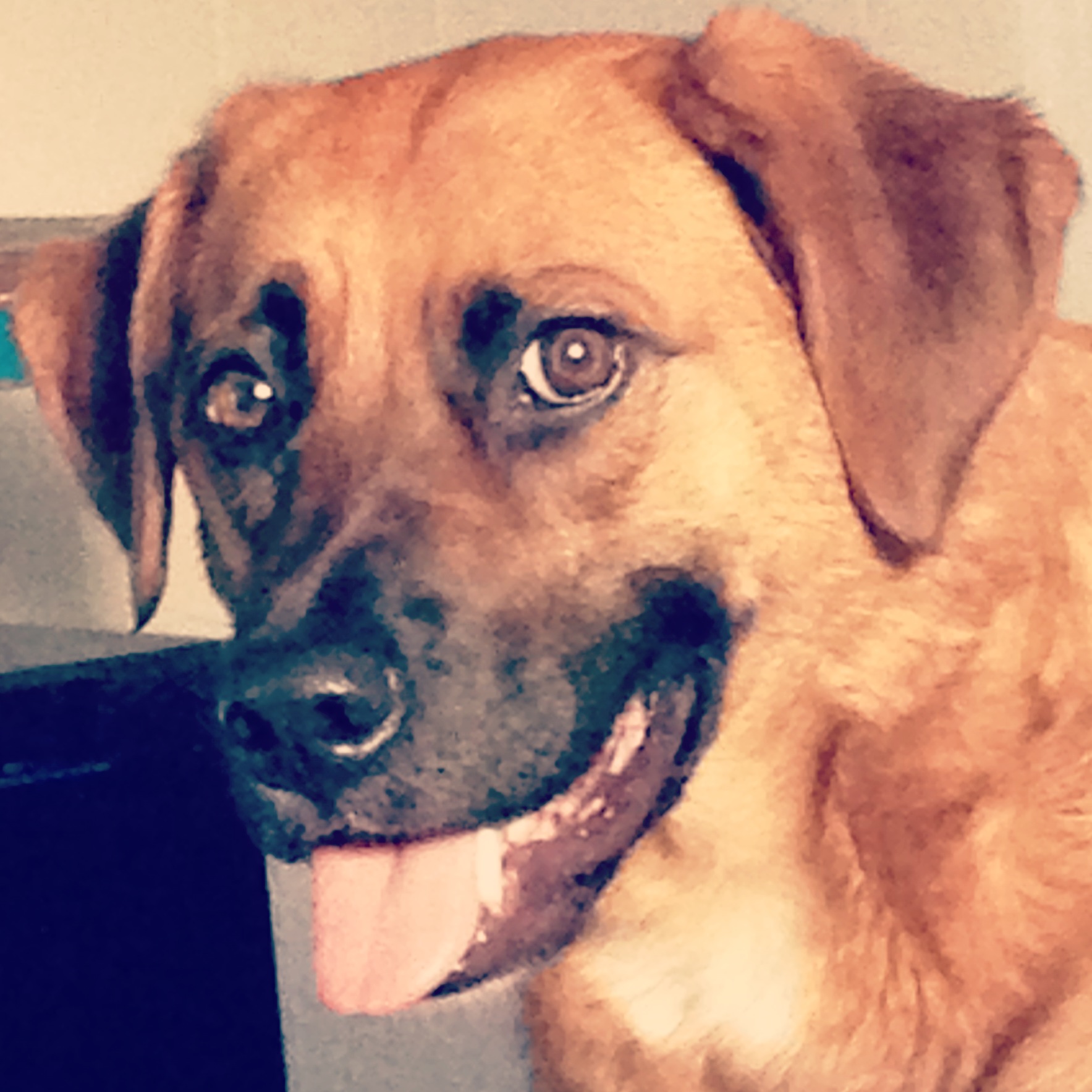
I am not over-exaggerating when I say that Ruby has almost died AT LEAST 5x in her 4.5 short years. Not a day goes by that I am not grateful for her. This dog has a good life, and like all animals she has a story. I’m thankful her story is wrapped up in mine.

A few weeks ago I read an article about Dr. Martin Blaser and it made me think a lot about the risks vs rewards of science. Blaser’s research focuses on missing microbes because of antibiotics. An article on the NPR website states:

We have had antibiotics since the mid-1940s — just about as long as we have had the atomic bomb, as Dr. Martin J. Blaser points out — and our big mistake was failing long ago to appreciate the parallels between the two. Antibiotics have cowed many of our old bacterial enemies into submission: We aimed to blast them off the planet, and we dosed accordingly. Now we are beginning to reap the consequences. It turns out that not all germs are bad — and even some bad germs are not all bad.

Blaser believes that antibiotics in young children can cause a gut imbalance of the positive bacteria which may cause a susceptibility to severe allergies. Our overuse of antibiotics, one of the very best discoveries of the 20th century, causes repercussions that are slowly emerging.

For the last few years, I have been 100% convinced that Ruby, our wonderful, crazy, weird lovebug of a dog has horrible allergies because she had 4 courses of antiobiotics in her first 8 months of life. Reading about this research confirmed my suspicions.

As a newly adopted rescue puppy, Ruby came to us with severe giardia and stomach issues. At night, I would fall asleep wondering if she would be alive in the morning. We were at the vet every other week trying to get her fixed – luckily, we had a fantastic vet who assured us that we would get her healthy. It became our mission to cure her. We tried many, many things – among them antibiotics. We gave her antibiotics to cure the giardia 2x. The first dose didn’t work, the 2nd one worked a little better. We gave her another dose of antibiotics after she was spayed. And we gave her a 4th dose after more stomach issues caused her to have blood in her poo.

After the last dose of antibiotics did not fully cure her belly aches, at 8 months old, we had Ruby tested for food allergies. The test cost about $300 – it was worth every penny, because it showed strong reactions to poultry, peas, peanut butter, potatoes, wheat, and eggs. These were all the foods we had been feeding her while she was on antibiotics. Although her food allergies were severe, we were glad to know that there may be finally something that we could do to help her get better.

IMG_0925

We changed her food, and Ruby slowly got better. She gained weight and after a super stressful first year, she finally became healthy. We don’t know if it was the antiobiotics, or she started growing out of her ailments, or the food switch to avoid allergens, or the probiotics we added her to her food (she still gets them), or all the love and snuggles we gave her. In reality, it was probably a combination of different things.

About 2.5 years ago we found out that Ruby’s allergies weren’t just limited to foods.

One Sunday night at dusk, Ruby was running around the yard, and then she was running sideways like she was drunk. I told her to come in the house because she was acting like a nut – she ran in, jumped on the couch and peed all over it. Her eyes were unfocused and she looked terrified. She started towards the door, and poo & vomit came out of her, and then she collapsed. We had NO idea what happened.

We picked up her limp body, put her in the car, and raced to the emergency room vet. The 15 minute drive took forever. Sean drove, while I sat in the hatchback with Ruby in my lap. She was barely breathing, with blueish lips, and cold limbs. We called the vet on the way, and they were waiting for us with a stretcher to rush her into the operating room. After 10 minutes of anxious waiting, we learned that Ruby had been stung by a bee (in her mouth) which caused anaphylactic shock. In dogs, anaphylaxis manifests itself by shutting down the gastrointestinal and cardiovascular systems. It is not pretty.

After we found out what happened and that she would be okay, I started shaking and crying and had a hard time pulling myself together. Ruby had to stay overnight at the vet, but before we left her, we went to see her in the back. She looked at us, snuggled into my hands, and thumped her tail a few times to let us know she’d be okay. Heartbreaker.

Bees are everywhere. We noticed this immediately after we got home. The vet told us that each time she got stung the reaction would be worse. Sean and I were terrified.

I’ll write about what happened next in a few days, but honestly, it is hard to write about. I am superstitious about Ruby. Ruby has days when she is moody and bratty, but even on those days I am overwhelmed with love for her.

I’ll wonder for my entire life if the antibiotics caused all of the allergies. And I’ll wonder if they saved her life when she was a sick pup. And what would I do if given a do-over…

Meat and Antibiotic Use: Reason #10940503403534950 not to eat meat is HERE 

READ: Station Eleven by Emily St. John Mandel

I am so excited about this book. If you think that you don’t like dystopian books, this one will change your mind. I guarantee it. Go get this book.

Dystopian books make me appreciate my life even more tFullSizeRender-2han I already do. Right here, right now. We’re so lucky to have all of these things that we do. We may be in the Age of Anxiety, but in 1st world countries we have antibiotics, electricity, information at our finger tips, hot showers, Lasik eye surgery (life-changing), oranges all year round. It is pretty amazing that the world exists right now when there are so many ways that it might not.
Station Eleven skips around between a near future where a super flu with a 99.9% mortality rate sweeps over the world, the world right before the pandemic breaks out, and 20 years after the outbreak. It follows three different characters – an aging actor who has been married many times, a young Shakespearean actress, and a paparazzo turned paramedic – and the ways their lives overlap before, during, and after the flu pandemic.

The overarching theme of the novel is a quote from Star Trek: Voyager, “Survival is insufficient.” We need friendships, laughter, beauty, compassion. We need art, imagination, creativity. A little dose of Shakespeare does wonders for the spirit and the mind. Art in “Station Eleven” involves taking risks (group of traveling actors who travel the Great Lakes region to bring Shakespeare & music to the outposts that remain after the world has ended) and doing what you love out of genuine passion (The Shakespeare trope contrasts against the aging actor who has lost himself in celebrity).

At the center of the novel is the creation of a piece of art, the comic book Station Eleven, a labor of love and method of escape for a character. This piece of art parallels the post-apocalypic world that remains. Lonely, haunted by the past, and inescapable.

This book left me with creepy tingles. What we have right now won’t last. We have no idea what will happen in 5 years, 10 years, 20 years but we make plans as if we can control the future and often we don’t appreciate the simple comforts in our lives.  At one point in the book the following dialogue occurs between two characters:

“Are we supposed to believe that civilization has just come to an end?”

“Well,” Clarke offered, “it was always a little fragile, wouldn’t you say?”

The melancholy, contemplative feel of the novel has lingered with me. But overall, readers are left with a feeling that life is beautiful, the gift of memory is precious, and we go on in the face of horrible tragedy.

Read this book!

*****************************************************************************************

Margaret Atwood has a new collection of short stories out – Stone Mattress: Nine Tales. I may be Atwood’s biggest fan. The Oryx and Crake Trilogy and “The Handmaiden’s Tale” are the most incredible pieces of speculative fiction I have ever read. She is an incredible prognosticator and a prolific writer. “The Robber Bride”, “Alias Grace”, “The Blind Assassin”…all must reads. I read the stories in “Stone Mattress” and laughed out loud several times. I like her novels more than anything else, but her latest collection of witty, sharp quick reads is a great addition to her long publication list.

 ******************************************************************************************

If you love music, check out the show Sonic Highways on HBO. It is a 8 episode series that follows the Foo Fighters as they travel to different cities, delve into the music of that city, and then write and record a song in each city. In Sound City Dave Grohl brilliantly captured music legends, and he continues that in this documentary series.

http://www.youtube.com/watch?v=q0TrqXHoL10

READ: The Bone Clocks by David Mitchell

“Cloud Atlas” by David Mitchell is on my Top Ten list of my favorite books ever, but I rarely tell people to read it. It is not for everybody. In fact, I think most people that I have recommended it to never finished it.

His latest masterpiece “The Bone Clocks” is my favorite book of the year. So, I HIGHLY recommend it with several caveats:

  • This book requires your full attention and it is 624 pages.
  • This book is not happy, in fact it made me pretty depressed.
  • This book is realist, sci fi, comedic, and weird. It can’t be defined or explained in one sentence.

“The Bone Clocks” is so fantastically good. I love books that play with narrative structure (like Jennifer Egan’s “A Visit from The Goon Squad” – if you have not read it, go get it!) and that cover an entire lifetime of a character. This book does both of these things in an awesome, powerful way. It reminds me of the perfect cross between Madeline L’Engle and Jonathan Frazen.

The book is divided into 6 parts and all of them have different settings and time periods. Each section got better than the previous one (Section 4 is a standout) and they all come together to form a cohesive story. Pay attention to the characters in each part. They come back over and over in unexpected ways. This book bewilders and is full of puzzles. So many parts had me saying “What is going on…”, keep reading, you’ll figure it out.

The sections follow different narrators (2 of the sections are narrated by Holly Sykes, a lovable, sassy heroine).

  1. 1980’s – A runaway teenager in England
  2. 1990’s – A social climbing Cambridge student
  3. 2000’s – A foreign war correspondent who has to decide between family and career
  4. 2010’s – A writer, who has already wrote his best work, travels the literary conference circuit
  5. 2020’s – A person who has been re-born over and over. This is when the novel starts to get really weird and a battle scene between Atemporals and Anchorites ensues.
  6. 2040’s – A woman battling to survive in a dystopic world that seems like our inevitable future. It involves Ebola and Climate Change.

The book explores power, family, capitalism, social mobility, and what we are able to do with the short time we have on the planet. It’s incredible.

Random items in the book I loved: The bad guys are carnivores, the good guys are herbivores (also used by Mary Doria Russell in “The Sparrow” – another must, MUST-read). Figuring out what a bone clock is. His ability to make his readers like jerky characters – perhaps because we can see qualities of ourselves in them. Sentences like: “My generation were diners stuffing themselves senseless at the Restaurant of the Earth’s Riches knowing – while denying – that we’d be doing a runner and leaving our grandchildren a tab that can never be paid.”

****************************************************************************************************************************************

If you don’t feel like a heavy book, I recommend Jojo Moyes latest  “One plus One.” She reminds me of a modern Maeve Binchy. She writes good books about ordinary people in England, and her books seem familiar (they are like good cheesy, romantic movies that involve silly misunderstandings, smart children, and overcoming hardships), while at the same time she gives them a fresh spin. Her characters can seem a little cliched,  but her books are always enjoyable and fun to read. I have been reading a lot of dark fiction lately, and some Jojo Moyes will be needed soon.


READ: YA books & The Queen of Tearling by Erika Johansen

I think if you don’t read when you are young, it is very hard to become a reader later in life. I believe that kids often learn to love reading from watching what the people around them do in their spare time. I have always been surrounded by people reading wide-ranging and diverse books. Lucky, lucky me.

As a kid, I would binge-read authors. If I liked one of their books, I read everything they wrote. These are the authors (and my favorite of their books) I loved as a young adult.

Madeline L’Engle – The BEST. Many WatersA Swiftly Tilting Planet, and the entire Austin family series.

Judy Blume – I re-read Starring Sally J. Freeman as Herself over and over.

LM Montgomery – I spent a lot of time reading all of her books – Anne of Green Gables books (there was a ton) as well as the other series: Emily of New Moon , Pat of Silver Bush, and the Story Girl. If you read the entire Anne series, I know you remember Rainbow Valley (about Anne & Gilbert’s children and the Meredith family) and Rilla of Ingelside.

Phillip Pullman – The Sally Lockhart books! And a few years ago, I read his Golden Cosecuredownloadmpass trilogy. So much better than Harry Potter!

Laura Ingalls Wilder – Like so many young girls, this series got me hooked on reading.

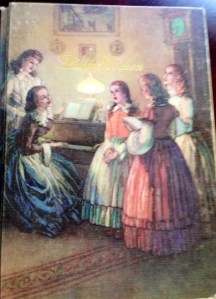
Louisa May Alcott – I have a gorgeous edition of Little Women that I’ll keep forever. I can remember reading this book and talking to my Grandma about it. I loved that the story continued with Little Men & Jo’s Boys.

Betty Smith – A Tree Grows in Brooklyn, and I remember feeling so adult reading Joy in the Morning

Getrude Chandler Warner – Boxcar Children! Sounded like so much fun.

Susan Beth Pfeffer – The Sebastian Sisters series (Evie at 16, Thea at 16, Claire at 16, etc.)

Lois Duncan – Locked in Time (!!!), Killing Mr Griffin

Christopher Pike -What teenager growing up in the 80’s did not read these books? Slumber Party, Chain Letter….

Lois Lowry – A Summer to Die

Katherine Patterson – Bridge to Terebithia

Willa Cather – My Antonia, O Pioneers

Cynthia Voigt – Homecoming, Dicey’s Song

Carol Brink – Caddie Woodlawn

Zilpha Keatley Snyder – The Egypt Game (I was obsessed with this book) , The Changeling, and The Headless Cupid

Beverly Cleary – Dear Mr Henshaw 

Caroline B. Cooney – Her paperbacks were ALL over the library. Camp Girl Meets Boy, Among Friends, Twins…and remember the Cheerleader series??

Also, all of these series: Babysitter Club, Sweet Valley High, Sunfire (historical love stories with titles like Amanda, Emily, etc.), Flowers in the Attic, Encyclopedia Brown, Nancy Drew, and Choose your Own Adventure.

What books have I forgot?? And I wonder if I would cringe if I re-read some of the books above…

YA fiction is a lot different than it used to be, it’s not just for kids anymore. I just finished a great YA fantasy book, The Queen of Tearling by Erika Johansen. It is the first in a trilogy and it follows Kelsea Raleigh, the Glynn Queen, as she rises to power. It embraces much-used conventions like an orphan girl raised in the woods, an evil queen, and magical jewels. It embraces fairytales, myths, a dystopic world, and the hero’s quest to create a unique, addictive read. And, surprise, the movie is in the works with Emma Watson (!) as Kelsea.

Johansen is a graduate of the Iowa Writers Workshop, like so many other published authors these days (other graduates that I have recently wrote about include Edan Lepuki & Ann Patchett). I also just finished reading another book by a graduate of the program, Cutting Teeth by Julie Fiero. It is the total opposite of YA fiction. It is a biting satire on parenthood, mommy groups, our collective anxiety, and the pitfalls/bonuses of having children. I laughed out loud several times as I read it, and some parts of it hit way too close to home.

*****************************************************************************************************************************************

I started reading The Mockingbird Next Door last week, and I put it aside after 2 chapters. Decided that I don’t want to know anything about Harper Lee because I want to keep To Kill a Mockingbird as pure as I can in my head.

READ: My Salinger Year by Joanna Rakoff

This book surprised me, in a good way.

I expected an ode to Salinger, but to be honest, I’m not that into The Catcher in the Rye, so I thought this book might annoy me. I picked it up anyway because I liked the cover (Salinger would have been very disappointed because he thought covers should be plain. Covers are really important – I judge books by them all the time). Instead of the paean I predicted, this book turned out to be a fun memoir about a pivotal year for Joanna Rakoff in New York City.

Rakoff started working in the real world in 1996, like I did, just as the internet changed EVERYTHING about working in a office. All of a sudden, co-workers wrote an email instead of walking next door for a conversation about a project. So much information at the tip of our fingertips, in an instant. However, the literary agency where Rakoff has her first job takes pride in the fact that they use typewriters and dictaphones. They don’t want to change. They smoke and drink in the office (they did where I worked in 1996 too!). They are a last remnant of a dying system. Rakoff expects offices to be glamorous places, instead she gets a crash course on the dullness of them. Even the New Yorker is in a boring building.

Perhaps the agency remained a relic of the olden days because their biggest client was the man, the myth, the legend – JD (Jerry) Salinger. As a newbie at the agency, Rakoff discovers what working with Salinger can be like. For instance, he has exact details on how he wants his books to be printed. The title must be horizontal on the spine, not vertical…Interestingly, she has not really read Salinger, and when she decides to read all of his work, it happens on a weekend when she faces many crossroads in her life – at a time when she is learning to trust her judgement in life and in her literary analysis.

Of course, we all know that Salinger was a hermit. In this day and age, authors have a hard time going into seclusion like Salinger did. They need to market their books, and so they have blogs, facebook pages, a twitter account,  a full schedule of readings and conventions, etc. We often feel like we know the author, sometimes before we read their books. Most of my favorite authors, David Mitchell, Margaret Atwood, Elizabeth Gilbert, etc. are all over social media. Salinger kept his private life, private, for his entire life. Quite the feat. This memoir makes you think about why he may have chosen to keep himself exiled.

Another great feature of this memoir is that it is a love story to New York. It opens with a magical winter snowstorm that shuts down the city. Rooftop parties, dark bars, cold weather, Central Park, exorbitant rent, shady neighborhoods, and long rides on the subway all illustrate the NYC experience.

Just read both of these articles which popped up this week when I finished the book:

Salinger’s house where he lived in his self-imposed seclusion is for sale. Check it out here.

Also, Dani Shapiro wrote a great, short essay last week in the New Yorker about memoir and social media. Read it here.

************************************************************************************************************************

A few days ago I parked my car at work and finished listening to Cutting for Stone – when it ended I sat in stunned silence and cried. The story took me on an amazing adventure. I am madly in love with this book. Ghosh and Hema are two of my favorite characters that I have ever encountered. Verghese takes the time to introduce the characters, and as a reader you may feel like it takes a long time. It is worth it. The medical and historical details are riveting. I loved this book.

Unknown


Last week I escaped into the final installment of the All Souls Trilogy by Deborah Harkness, The Book of Life. A super fun read that continues the saga of Dianna and Matthew and a host of witches, daemons, and vampires who live among us. Among all of the supernatural elements, issues about genetics and disease and racism are explored. The whole trilogy was so much fun.

READ: Euphoria by Lily King

I finished Euphoria last week, and I am still thinking about it. Good books leave lasting impressions. They enter our dreams, thoughts, and become a part of our psyche.

Like The Paris Wife (Paula McLain) & Loving Frank (Nancy Horan), the premise of this novel comes from real events and real people. The main characters in Euphoria, Fen, Nell, and Andrew, are based on Margaret Mead and two of her lovers. It is a fictionalized account of time they spent studying New Guinea tribes in the 1930’s.

This short novel is densely packed with vivid descriptions of the tribes of New Guinea. Cannibalism, sexual rituals, human sacrifices. Bugs, illness, the darkness of the night, tropical sicknesses.

Fen, Nell, and Andrew are all anthropologists studying the culture and the people.th They are pioneers in the science of anthropology (the study of humans) which was in its infant stages. Techniques for the new science were being developed – how do personal opinions skew results, results can be interpreted in many ways, what methodologies should be used, egos. At one point, in a frenzy, the three main characters create a grid that places people in groups. They believe they have captured all humans with their mapping. But, these ideas and characterizations they have captured were used in ways they never anticipate because results are always subject to interpretation.
The three characters are slowly revealed in the novel. They aren’t entirely likable, but they are interesting despite their flaws. They form a unique love triangle filled with tension, passion, and devotion. More than anything, Andrew wants to learn to be an anthropologist so he soaks up all of the information that he can from them. Nell/Margaret Mead takes the science of anthropology very serious and her bravery is admirable.  And Fen…well, he reminds me of some people in academia that I have encountered.

Humanity takes so many different, mind-boggling forms.  Euphoria explores our flawed, and beautiful, existence.

**************************************************************************************************************************

The Deepak/Oprah challenge 3 week meditation challenge, EXPANDING YOUR HAPPINESS started on Monday. You can catch up with it.

Make this Cilantro Chile Almond Dip and these Double Chocolate Chunk Cookies

Listening to Cutting for Stone by Abraham Verghese. Phenomenal. How am I just reading (listening) to this book? Pick this book up right away if you haven”t read it.  It explores medicine, siblings, love, Africa, India, family dynamics, politics…the characters are incredible. I have 2 more CD’s left of the book and I don’t want it to end.

Read: California by Edan Lepucki + 2 more bummer reads

I wanted to be a writer when I was a kid. That’s what I really, really wanted to do when I grew up.

I spent a lot of time alone, writing and reading. A few of the stories I wrote have survived, but most of them disappeared years ago. Probably good that I can’t find them because they are really good in my memories, if I still had them I’d be reminded of how horrible they were.

What I did more than anything else was world-building. I’d construct entire families and villages in my head, and think about every little detail of their lives. It would consume hours of my day. It was delightful.

I remember the exact moment I decided that I could not be a writer. About 12 years old. I had just wrote a story about a mom and her daughters, the mom gets re-married, the man she marries has three boys, and they have lots of adventures as a modern stepfamily. Obviously, if you know my family, you know that I was writing about my real life (although it was a year or two before my mom and stepdad got married). I thought I was writing a pretty original story. I am not kidding, I really did. I was really well-read at the age, I had watched the Brady Bunch, but for some reason I thought my story was new. Naive!

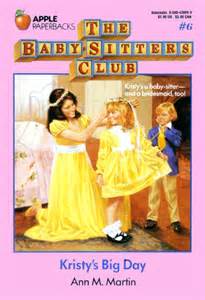
I picked up the next installment of The Babysitters Club, Kristy’s Big Day, and my heart sunk when I started reading it. Ann M. Martin had stole my idea! thI decided then and there that all the good ideas had been written about. What was the point of writing a story if others had already told the same one? I decided I could never be a writer. This whole episode is documented in my dramatic pre-teen journals.

I stopped writing all the stories I had spent so much time on, but of course, I did not stop reading. As I read more and more, I became TOTALLY convinced that I would never be able to be a writer. I would never be able to do what they could do.

Writing takes courage and perseverance and patience and TALENT.

Damn, I still want to be a writer.

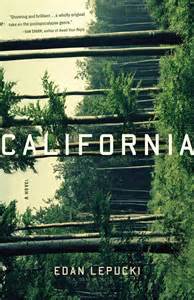
I read about California by Edan Lepucki last year (I posted about it here) and I was green with envy because she had taken  an idea I had been playing with in my head and she had turned it into an actual book. California, dystopic, wilderness, love – all the necessary ingredients for a good book. However, this book just worked okay for me, I did not love it.

There has been so much hype around  the book, on Colbert Report, etc. A LOT to live up to.

th

The good things about the book: Beautiful, gorgeous cover. Believable moments as humanity has reached a breaking point, but is not completely broken yet (like in other dystopian books). Good, well-developed, flawed characters. Some great lines and I like the ideas that the book is trying to explore. The feeling of escaping to the wilderness. “This was one of the things he loved about life out here. The space to consider questions. Even if he sometimes longed for mindless diversions, mostly he was grateful for the silence, the time”

The bad things about it: Stupid coincidences. Sloppy plot development. Dumb decisions.

I stayed up late to finish the book. But overall, it was not my cup of tea. I may have to write my own version of it.

For a good California dystopic read, I recommend The Age of Miracles by Karen Walker Thomas.

Another bummer read was Tom Robbins “autobiography” Tibetan Peach Pie. Boring. Not that interesting. He comes across as a little creepy. No matter what, Jitterbug Perfume will always, always remain one of my favorite stories.

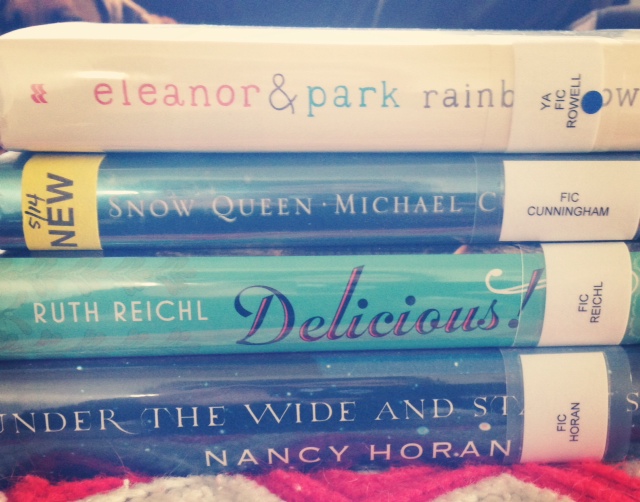
The final bummer read is Delicious by Ruth Reichl. I hope you have read Comfort Me with Apples and Tender at the Bone. Reichl writes food memoirs like no one else (except maybe Anthony Bourdain, but his are totally different than hers). Delicious is her first piece of fiction. I finished it, but it was not 1/2 as good as her memoirs. Which is probably a good thing, because it means her actual life is more interesting than fiction. I wanted more descriptions of recipes and food. The character were boring. It was fine…meh.

My 6 month long good reading streak had to end sooner or later. Two days ago I picked up a huge haul at the library, and I think I am about to start another good streak. I just finished listening to Cuckoo’s Calling by Robert Galbraith (aka JK Rowling) on my commute – highly recommended. Right now, I am listening to The Storied Life of AJ Fikrey by Gabrielle Zevin – fantastic! Plus, I just bought a cookbook, Salad Samurai by Terry Hope Romero, and all the recipes that I have made from it have been perfect for the hot weather.

I’ve had another idea in my head for the last few months about what I want to write about. I have characters, but I need a plot. Maybe I’ll be able to get it out of my head and create something, or maybe I’ll just let it stay in my head where it can’t be judged and no one can ever say that it was a “bummer” read.

READ: And the Dark Sacred Night by Julia Glass + a few more

Julia Glass published her debut novel “Three Junes” in 2002 and, according to my book journal, I read it at the beginning of 2004. In the entry for it I have 4 stars (the highest possible), and I wrote, “Astounding! Why didn’t I write this? Fenno!!” Obviously, I loved it.

I read “Three Junes” over 10 years ago, but it feels like just yesterday that I was immersed in the lives of the McLeod family. Glass creates vivid, complex characters and it was hard to leave them when I finished the last page. Glass gives her readers a gift with “And the Dark Sacred Night” because she lets us in on what happened to some of the characters after “Three Junes” ended. The characters lives always go on…but most of the time us readers are left to wonder how it all really turned out.

Glass presents every day normal life with its beauty & sadness & confusion & love. She captures little nuances of the characters that make them feel like you have actually met in person. Her books usually switch around narrators which helps capture all the different viewpoints of people at different points in their lives. This narrative masterfully switches between the lives of Daphne, Kit, Jasper, Lucinda, and Fenno. The heart of the book is the story of Kit searching for his unknown father. As he searches, Glass explores what it means to make your own family and the profound impact that people who enter our lives for a very short amount of time can have.

If you haven’t read “Three Junes” by Julia Glass, read it before picking up “And the Dark Sacred Night” (not necessary, but it will be even more enjoyable that way). Together, they are perfect summer/vacation reading. Big, juicy, well-written novels that will immerse you in the tangled imperfect love that families of all kinds have.

I’ve been reading a lot the last few weeks. All the books have been good, and should be added to your list. What a luxury to do so much reading.

I devoured “Eleanor and Park” by Rainbow Rowell in about 2 hours. A young adult love story about 2 teenagers that is set in 1986 when mixed tapes were the most amazing gift ever. If you’ve read the book, I know you loved Park’s Dad! Fun, fast read. I’m glad that teenagers have books like this to read.

I also just finished “Under the Wide and Starry Sky” by Nancy Horan. The book is not as good as “Loving Frank” but it is still a worthwhile read. Fanny, the wife of Robert Louis Stevenson (author of “Jekyll and Hyde” and “Treasure Island”) is the central character in this historical fiction. A rule-breaker and a fearless female who divorced her first husband and traveled all alone to Europe with 3 children to pursue art in the 1800’s. The life that she and Stevenson led was extraordinary. They traveled all over the world searching for a place that would be a good habitat for Stevenson’s consumptive lungs.

At one point Stevenson is homesick for his native Scotland, “How bitterly ironic to be surrounded by palm trees, flying foxes, sweet-smelling gardenias, red and yellow fruit doves. And what do I see at every turn? My gray-pigeoned homeland.” When I read that line I was having massive homesickness for my family. It’s never easy wanting to be in two places at once, I can’t imagine what it must have been like before airplanes, FaceTime, and texting.

Another book I just read is “The Snow Queen” by Michael Cunningham. It is hard for me to describe how the writing of Michael Cunningham touches me. I love his sentences. I love the beauty of the ugly worlds he often describes. His books are like huge poems that I want to re-read because there are so many things that I feel like I missed. He writes simple sentences like, “People are more than you think they are. And they’re less, as well. The trick lies in negotiating your way between the two.” And then writes big, huge, gorgeous run-on sentences like,

 The young couple is, it suddenly seems, what Beth came outside to see. She can’t of course know what troubles may beset them, or what troubles await, but she’s satisfied by the fleeting apparition of two young people who are doing fine, right now; who have each other to laugh with, to hold hands with; who can thoughtlessly pass between them the simplicity of youth, of love, of a night that must, for them, promise an endless strand of nights, a world that offers even more than they’d hoped for; that’s given them this snow blown street and the promise of home, soon, as if love and shelter were the simplest things in the world.

“The Snow Queen” explores the interdependency of siblings, middle-age, and losing people that we love way too soon. This is not an easy read, but I think you should still pick it up and give it a try.

Library Haul

Also, I just finished listening to “Sarah’s Key” by Tatiana De Rosney. Listening to this powerful book about the Vel D’Hiv roundup of Jews in Paris coincided with a visit I took to the Holocaust Museum in Washington DC. We are a horrible species in so many ways.

I am listening to “The Invention of Wings” by Sue Monk Kidd (an Oprah pick!)- all of sudden my commute has become one of the highlights of my day. The narrators in this audio version are spectacular. I feel like I am in the deep South in the early 1800’s. Both of these audio books have made me think a lot about what I would do if my comfortable life was on the line. I hope I would be brave and do the right thing.

If you are looking for a book to read in July, maybe add “California” to your list. Here’s the first chapter. It comes out on July 8th, I’ve been looking forward to it since December.


READ: This is the Story of a Happy Marriage by Ann Patchett

About 13 years ago I read “Bel Canto” by Ann Patchett. I did not like it very much, although I can’t remember why. At some point I need to go back and re-read it because everyone else I know who read it loves it. A few years later I read an interview with her, and I thought that she sounded like someone I wanted to be friends with, so even though I didn’t like “Bel Canto,” I decided to go back and read her first book “The Patron Saint of Liars.” I am so glad I gave her another try. I also loved “Truth and Beauty” and “Run” – and my esteem for her continues to grow.

Her latest publication “This is the Story of A Happy Marriage” is a collection of 22 personal essays that were published in OutsideGourmet, Atlantic Monthly, Harpers, NY York Times, and more. Every single story in this book is a gem. She writes about writing, marriage, divorce, the slow death of her grandmother, dogs, owning a bookstore, her love of a nun, Nashville, trying out for the policy academy, opera, and censorship. She obviously thought very carefully about what stories to include in this collection because not one of them is a dud. They are the kind of stories that you could read over and over. Each one of them spoke to me.

In my favorite essay in the collection, “The Getaway Car: A Practical Memoir about Writing and Life,” Patchett discusses her road to getting published and how she has supported herself as a writer since she graduated from college. She dispenses so much honest, down-to-earth, practical information in this essay. Part of me has always wished that I had applied for an M.F.A. program instead of getting an MA in English, but she confirmed my practical decision (where we went into no debt for my degree). She writes: “my most empathetic piece of advice regarding whether or not to attend an M.F.A program has to do with money: no one should go into debt to study creative writing. It’s simply not worth it. Do not think of it as an investment in yourself that you’ll be able to recoup later on…” Patchett knows that writing requires work, talent, AND luck.

Patchett is friends with Elizabeth Gilbert, which is pretty cool. She loves dogs, which is even better. But, perhaps the most awesome part about her is that she OWNS a bookstore. When all of the bookstores in Nashville closed, Patchett and a business partner opened a small independent bookstore. She writes blog posts on the bookstore webpage and they are full of great reading recommendations. In the essay “The Bookstores Strikes Back” she describes the unpredictable way that she ended up opening a bookstore. I so appreciate how she reminds her readers to shop at stores that you truly support. She writes:

 But my luck has made me believe that changing the course of the corporate world is possible. Amazon doesn’t get to make all the decisions; the people can make them by how and where they spend their money. If what a bookstore offers matters to you then shop at a bookstore. If you feel that the experience of reading a book is valuable, then read a book. This is how we change the world: we grab hold of it. We change ourselves. 

Our money is our voice and that is how we can make a difference…which is why I don’t shop at Walmart.

Random, surprising fact I learned reading these essays – Patchett had a relationship with David Foster Wallace. He got around…Ann Patchett, Mary Karr, Elizabeth Wurtzel. I just finished reading about the Karr/Wallace relationship in “Lit” and Patchett (briefly) describes her relationship with him in “This is the Story of a Happy Marriage.” Wallace’s essay “This is Water” remains one of the best things I have ever read, but whenever I read descriptions about him he sounds like someone I would not want to be around.

Odds and Ends:

  • If you listen to podcasts make sure to check out the interview that Ann Patchett did with Teri Gross on Fresh Air.
  •  I think I may be the only person on the planet who did not read the Harry Potter series. Not sure why I never read them…Last week, I finished listening to JK Rowling’s novel “The Casual Vacancy” on CD. It is full of miserable people, set in the countryside of England, and will keep you turning the pages to see what happens next.
  • For fun reading about authors check out the Daily Beast’s How I Write series. Super fun and interesting facts about all the writers I love. Margaret Atwood and Barbara Kingsolver are my 2 favorites interviews…of course.